Currently Empty: ₹0.00
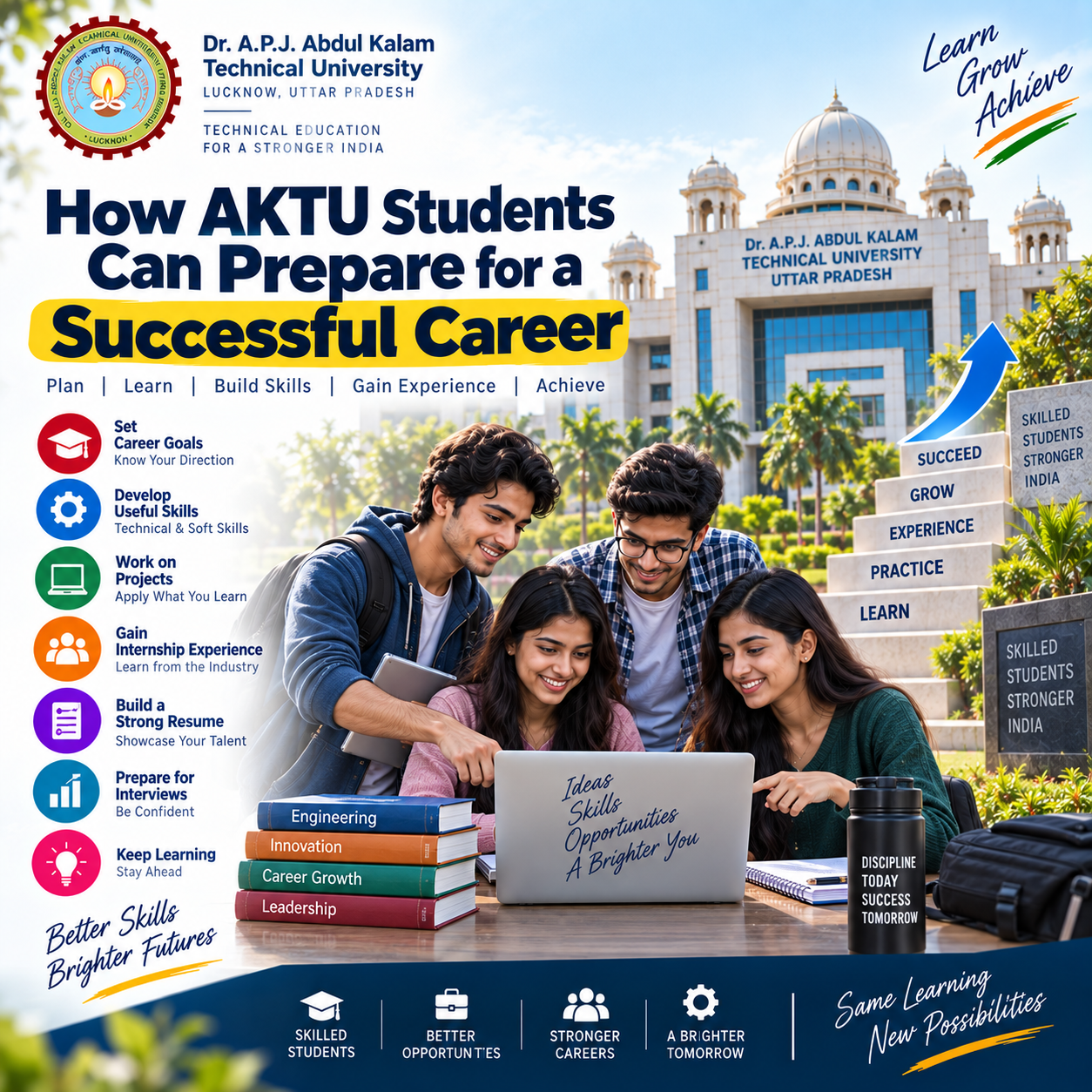
Preparing for a successful career should begin during college, not after graduation. For students studying at Dr. A.P.J. Abdul Kalam Technical University (AKTU) and its affiliated institutions, academic knowledge is important, but practical skills, communication abilities, industry awareness, and career planning can also play a major role in professional growth.
Effective AKTU Career Preparation can help students become more confident and better prepared for future opportunities. Whether a student wants to work in engineering, software development, management, research, entrepreneurship, or another field, building the right skills during college can make a significant difference.
In this article, we explore practical ways AKTU students can prepare for a successful career.
Why Is AKTU Career Preparation Important?
The job market is constantly changing. Employers often look beyond academic qualifications and consider practical knowledge, problem-solving ability, communication skills, and relevant experience.
Proper AKTU Career Preparation can help students:
- Identify suitable career options
- Develop industry-relevant skills
- Gain practical experience
- Build professional confidence
- Improve interview readiness
- Create a strong professional profile
- Prepare for future career challenges
Starting career preparation early gives students more time to explore their interests and improve their abilities.
1. Identify Your Career Goals
The first step in career preparation is understanding what type of work interests you.
Students can ask themselves questions such as:
- Which subjects do I enjoy the most?
- What type of problems do I like solving?
- Do I prefer technical or management roles?
- Which industries interest me?
- Do I want to pursue higher education?
- Would I like to start my own business?
Having a clear career direction can help students focus on developing the right skills.
However, students should also remain flexible because interests and career goals may change as they gain more experience.
2. Build Strong Technical Skills
Technical skills are especially important for students pursuing engineering and technology-related careers.
Depending on their field, students may focus on areas such as:
- Programming
- Data Structures and Algorithms
- Web Development
- Database Management
- Artificial Intelligence
- Data Analysis
- Cloud Computing
- Cybersecurity
- Engineering Software
- Industry-specific Technical Tools
Students should focus on developing skills that are relevant to their chosen career path.
The goal should not be to learn everything at once. Instead, students can gradually build a strong foundation and improve through regular practice.
3. Work on Practical Projects
One of the best ways to improve skills is by applying academic knowledge to practical projects.
Students can work on:
- Websites
- Mobile applications
- Software projects
- Engineering models
- Research projects
- Data analysis projects
- Innovative solutions
Projects can help students understand how theoretical concepts work in real-world situations.
A strong project portfolio can also help students demonstrate their skills during interviews and professional discussions.
4. Gain Internship Experience
Internships can provide valuable exposure to professional environments.
During an internship, students may learn about:
- Workplace culture
- Professional communication
- Team collaboration
- Industry tools
- Project management
- Real-world problem-solving
Internships can also help students discover whether a particular career path matches their interests.
Even short-term practical experiences can provide useful learning opportunities.
5. Improve Communication Skills
Communication is important in almost every career.
Students should learn how to clearly explain:
- Their ideas
- Technical concepts
- Project results
- Research findings
- Solutions to problems
Important communication skills include:
- Verbal communication
- Written communication
- Presentation skills
- Public speaking
- Professional email writing
- Interview communication
Students can improve these skills by participating in presentations, group discussions, workshops, and team projects.
6. Develop Problem-Solving Skills
Employers often value candidates who can analyze problems and find practical solutions.
Students can improve problem-solving abilities by:
- Working on challenging projects
- Practicing technical questions
- Participating in competitions
- Analyzing case studies
- Exploring real-world problems
Instead of only memorizing concepts, students should focus on understanding how knowledge can be applied.
Problem-solving is an important part of effective AKTU Career Preparation.
7. Build a Professional Resume
A resume is often an important part of the job application process.
Students should create a clear and professional resume that highlights:
- Educational background
- Technical skills
- Projects
- Internship experience
- Certifications
- Achievements
- Relevant extracurricular activities
Students should avoid adding unnecessary information and focus on skills and experiences relevant to the opportunity they are applying for.
It is also helpful to update the resume regularly as new skills and experiences are gained.
8. Prepare for Interviews
Interview preparation should not begin only when a job opportunity appears.
Students can prepare gradually by practicing:
- Self-introduction
- Technical questions
- HR interview questions
- Project explanations
- Problem-solving questions
- Communication skills
Students should also be able to explain the projects listed on their resumes.
Confidence usually improves with preparation and regular practice.
9. Develop Digital Skills
Digital knowledge is becoming increasingly important across many industries.
Useful skills may include:
- Online research
- Digital communication
- Data analysis
- Presentation tools
- Online collaboration
- Artificial Intelligence awareness
- Digital productivity tools
The specific skills required will depend on the student’s career field.
Students should focus on learning technologies that are relevant to their professional goals.
10. Build a Strong Professional Network
Professional networking can help students learn about industries, career paths, and professional opportunities.
Students can connect with:
- Teachers and mentors
- Alumni
- Industry professionals
- Fellow students
- Professionals working in their area of interest
Networking should focus on learning and building meaningful professional relationships.
Students can gain useful career insights by interacting with people who have experience in their chosen field.
11. Participate in Workshops and Events
Workshops, seminars, technical events, and training programmes can provide students with additional learning opportunities.
These activities may help students:
- Learn about new technologies
- Understand industry trends
- Improve practical skills
- Meet professionals
- Explore career options
Active participation can also help students become more confident and aware of developments in their field.
12. Keep Learning Beyond the Classroom
A university education provides an important foundation, but continuous learning is essential in a changing professional environment.
Students can learn through:
- Online courses
- Books and articles
- Educational videos
- Practical projects
- Workshops
- Research
- Technical communities
The ability to continue learning is one of the most valuable habits students can develop.
A Simple Career Preparation Plan for AKTU Students
Students can follow a structured approach to career development.
First Stage: Explore
- Identify your interests
- Learn about different career options
- Understand your strengths
Second Stage: Learn
- Develop relevant technical skills
- Improve communication
- Build digital knowledge
Third Stage: Practice
- Work on projects
- Participate in practical activities
- Solve real-world problems
Fourth Stage: Gain Experience
- Look for internships
- Participate in workshops
- Collaborate with others
Fifth Stage: Prepare
- Build your resume
- Organize your projects
- Practice for interviews
Following a structured approach can make AKTU Career Preparation more focused and effective.
Important Skills for Future Career Success
Students should aim to develop a balanced combination of technical and professional skills.
Technical Skills
These depend on the student’s field and may include programming, engineering tools, data analysis, or other specialised knowledge.
Communication Skills
The ability to explain ideas clearly is valuable in almost every profession.
Teamwork
Modern workplaces often require collaboration with different people and teams.
Adaptability
Technology and industries change rapidly, so students should remain open to learning.
Time Management
Managing deadlines and responsibilities is an important professional skill.
Critical Thinking
Students should learn how to analyze information and make thoughtful decisions.
The Importance of Continuous Learning
Career preparation does not end after getting the first job.
Technology, industries, and professional requirements continue to evolve. Students who develop a habit of continuous learning may be better prepared to adapt to future changes.
A successful career journey often involves:
Learning → Practicing → Improving → Adapting
Students should view career development as a continuous process rather than a one-time activity.
Conclusion
Effective AKTU Career Preparation can help students develop the skills, confidence, and practical experience needed for future professional opportunities.
Academic knowledge provides a strong foundation, but students should also focus on technical skills, communication, projects, internships, interview preparation, and continuous learning.