Currently Empty: ₹0.00
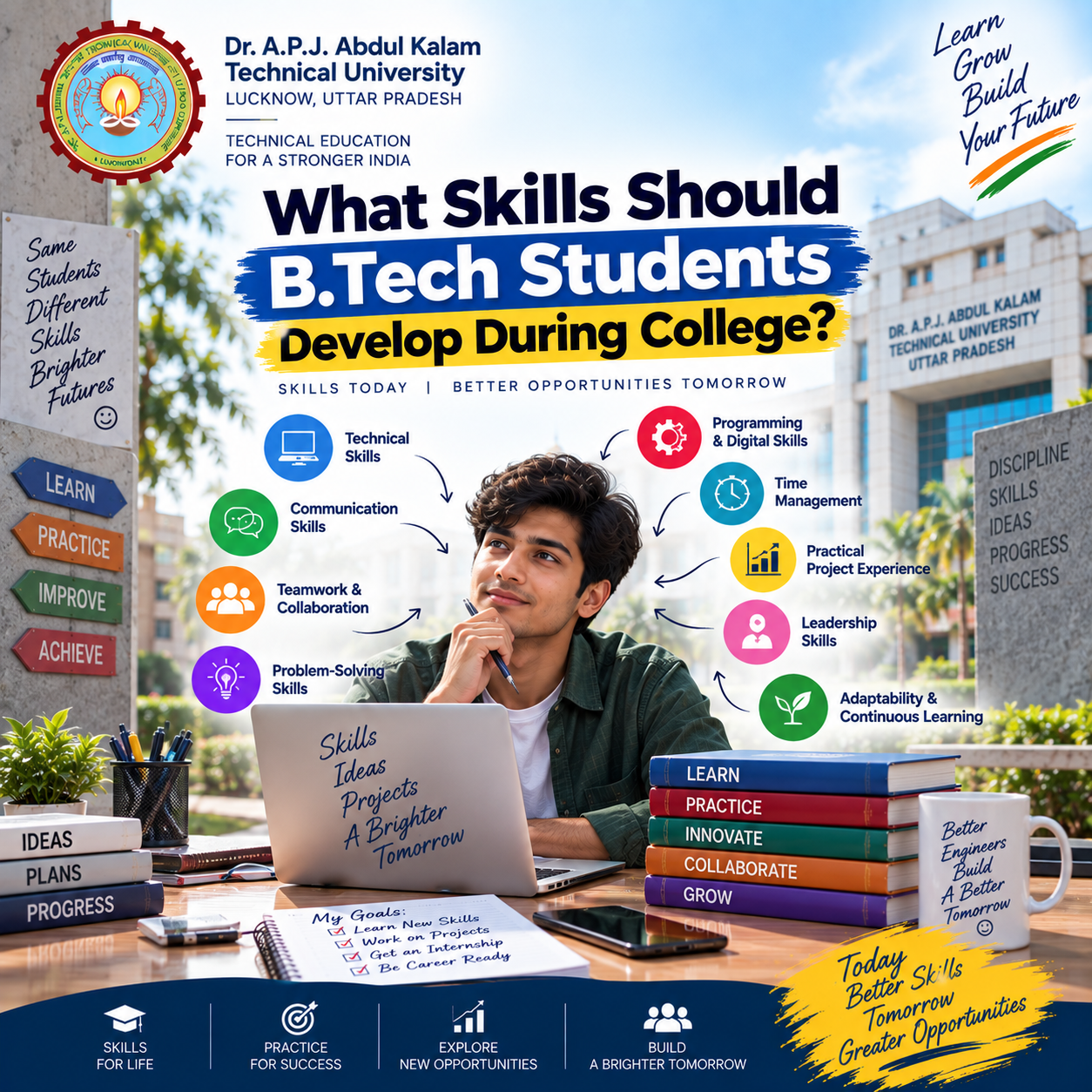
A B.Tech degree provides students with an important academic foundation, but building a successful career requires more than completing examinations and earning a qualification. Students also need practical knowledge, technical abilities, communication skills, and the confidence to apply what they learn.
Developing the right B.Tech Skills during college can help students prepare for internships, placements, higher education, and future professional opportunities. Whether a student is studying Computer Science, Mechanical Engineering, Civil Engineering, Electrical Engineering, or another branch, learning relevant skills can make the academic journey more productive and career-focused.
This article explores the important B.Tech Skills students should develop during college and how they can use them to prepare for the future.
Why Are B.Tech Skills Important?
Academic subjects help students understand the fundamentals of their engineering field. However, practical and professional skills help them apply that knowledge in real-world situations.
Developing B.Tech Skills can help students:
- Improve practical understanding
- Prepare for internships
- Build confidence
- Explore career opportunities
- Develop problem-solving abilities
- Adapt to changing technologies
- Prepare for professional responsibilities
A balanced combination of academic knowledge and practical skills can help students become better prepared for their future careers.
1. Technical Skills
Technical skills are among the most important abilities students can develop during their B.Tech education.
The skills required depend on the student’s engineering branch and career interests.
For example:
Computer Science Students
- Programming
- Data Structures and Algorithms
- Database Management
- Web Development
- Software Development
Mechanical Engineering Students
- Engineering Design
- Manufacturing Concepts
- Computer-Aided Design
- Machine Analysis
- Industrial Processes
Civil Engineering Students
- Structural Concepts
- Construction Technology
- Surveying
- Engineering Design
- Project Planning
Electrical Engineering Students
- Electrical Circuits
- Power Systems
- Control Systems
- Electrical Machines
- Energy Technologies
Electronics and Communication Students
- Electronic Circuits
- Communication Systems
- Embedded Systems
- Digital Electronics
- Signal Processing
Students should focus on developing skills that are relevant to their chosen field rather than trying to learn every technology at once.
2. Programming and Digital Skills
Digital knowledge is becoming increasingly important across many industries.
Even students who are not pursuing software-related careers can benefit from understanding basic digital tools and technologies.
Useful digital skills may include:
- Programming fundamentals
- Data analysis
- Digital communication
- Online collaboration
- Presentation tools
- Technical software
- Responsible use of Artificial Intelligence
Students interested in technology can gradually explore advanced areas such as Artificial Intelligence, Cloud Computing, Cybersecurity, and Data Analytics.
3. Problem-Solving Skills
Engineering is closely connected with solving problems.
Students should learn how to:
- Understand a problem
- Analyze available information
- Identify possible solutions
- Test different approaches
- Improve their results
Problem-solving skills can be developed through:
- Academic projects
- Technical competitions
- Coding practice
- Engineering experiments
- Case studies
- Real-world challenges
The ability to approach a problem logically can be useful in almost every engineering career.
4. Communication Skills
Technical knowledge is important, but students must also be able to explain their ideas clearly.
Communication skills can help students during:
- Presentations
- Group discussions
- Interviews
- Internships
- Team projects
- Professional meetings
Students can improve communication by practicing:
- Verbal communication
- Written communication
- Public speaking
- Presentation skills
- Professional email writing
Being able to explain a technical concept in simple language is a valuable professional ability.
5. Teamwork and Collaboration
Many engineering projects require students to work with others.
Teamwork helps students learn how to:
- Share responsibilities
- Communicate with team members
- Listen to different ideas
- Solve problems together
- Complete projects effectively
Students can develop collaboration skills through group assignments, technical events, workshops, and academic projects.
These experiences can also help students become more comfortable working in professional environments.
6. Time Management
Managing time effectively is an important skill for B.Tech students.
Students often need to balance:
- Classes
- Assignments
- Practical work
- Examinations
- Projects
- Skill development
A simple time-management approach can include:
Plan → Prioritize → Practice → Review
Students should create realistic schedules and focus on completing important tasks consistently.
Good time management can help reduce academic pressure and improve productivity.
7. Practical Project Experience
One of the best ways to develop B.Tech Skills is by working on practical projects.
Projects allow students to apply their academic knowledge and develop problem-solving abilities.
Examples include:
- Software applications
- Websites
- Engineering models
- Research projects
- Data analysis projects
- Technical prototypes
Students should try to understand the complete project process, including planning, development, testing, and presentation.
A well-executed project can also become a useful part of a student’s professional portfolio.
8. Internship and Industry Awareness
Internships can provide valuable exposure to professional work environments.
Students may learn about:
- Industry expectations
- Professional communication
- Technical tools
- Team collaboration
- Workplace responsibilities
Internships can also help students understand which career paths match their interests.
Along with internships, students should stay aware of developments in their chosen industry and the skills employers commonly seek.
9. Leadership Skills
Leadership is not limited to managing a large team. It can also involve taking responsibility, making decisions, and helping others.
Students can develop leadership skills by:
- Taking responsibility in projects
- Organizing academic activities
- Participating in student events
- Supporting team members
- Taking initiative
Leadership experience can help students become more confident and responsible.
10. Adaptability and Continuous Learning
Technology and professional requirements continue to change. Students should therefore develop the ability to learn new things and adapt to different situations.
Continuous learning may involve:
- Exploring new technologies
- Taking relevant courses
- Reading technical articles
- Practicing new tools
- Learning from projects
- Improving existing skills
Students do not need to master every new technology. Instead, they should develop a strong foundation and remain open to learning.
How Can B.Tech Students Develop These Skills?
Students can follow a practical approach to skill development.
1. Identify Your Career Interests
Think about the type of work you would like to pursue after graduation.
2. Choose Relevant Skills
Research the skills required for your preferred career path.
3. Start with the Basics
Build a strong foundation before moving to advanced topics.
4. Practice Regularly
Consistent practice is important for improving technical and professional abilities.
5. Work on Projects
Apply your knowledge to practical problems.
6. Gain Experience
Explore internships, workshops, and other learning opportunities.
7. Review Your Progress
Identify areas where you need improvement and continue learning.
A Simple Skill Development Plan for B.Tech Students
Students can organize their learning into different stages.
First Year
Focus on:
- Academic fundamentals
- Communication
- Basic digital skills
- Understanding different career options
Second Year
Focus on:
- Technical skills
- Programming or branch-related tools
- Small projects
- Practical learning
Third Year
Focus on:
- Advanced skills
- Internships
- Industry awareness
- Project development
Final Year
Focus on:
- Major projects
- Resume preparation
- Interview skills
- Career planning
- Higher education opportunities
This is a general approach, and students can adapt it according to their programme and individual goals.
Common Mistakes Students Should Avoid
Students should avoid:
- Trying to learn too many skills at once
- Ignoring practical experience
- Focusing only on marks
- Avoiding communication practice
- Waiting until the final year to prepare
- Following trends without understanding their interests
A focused and consistent approach is usually more effective than learning without a clear purpose.
The Importance of a Balanced Skill Set
A successful career often requires a combination of different abilities.
Technical Knowledge
Helps students understand their professional field.
Practical Skills
Help students apply knowledge to real-world problems.
Communication
Helps students explain ideas and work with others.
Problem-Solving
Helps students approach challenges effectively.
Adaptability
Helps students continue learning as technology changes.
Developing these skills together can help students become more confident and career-ready.
Conclusion
Developing B.Tech Skills during college can help students prepare for a wide range of academic and professional opportunities. Technical knowledge provides the foundation, while practical experience, communication, teamwork, and problem-solving skills help students apply that knowledge effectively.
Students should begin developing relevant skills early, work on practical projects, explore internships, and continue learning throughout their academic journey. The goal is not to master everything at once, but to build a strong and useful skill set over time.
With consistent effort and a clear learning plan, B.Tech students can improve their confidence, career readiness, and ability to adapt to the changing professional world.