Currently Empty: ₹0.00
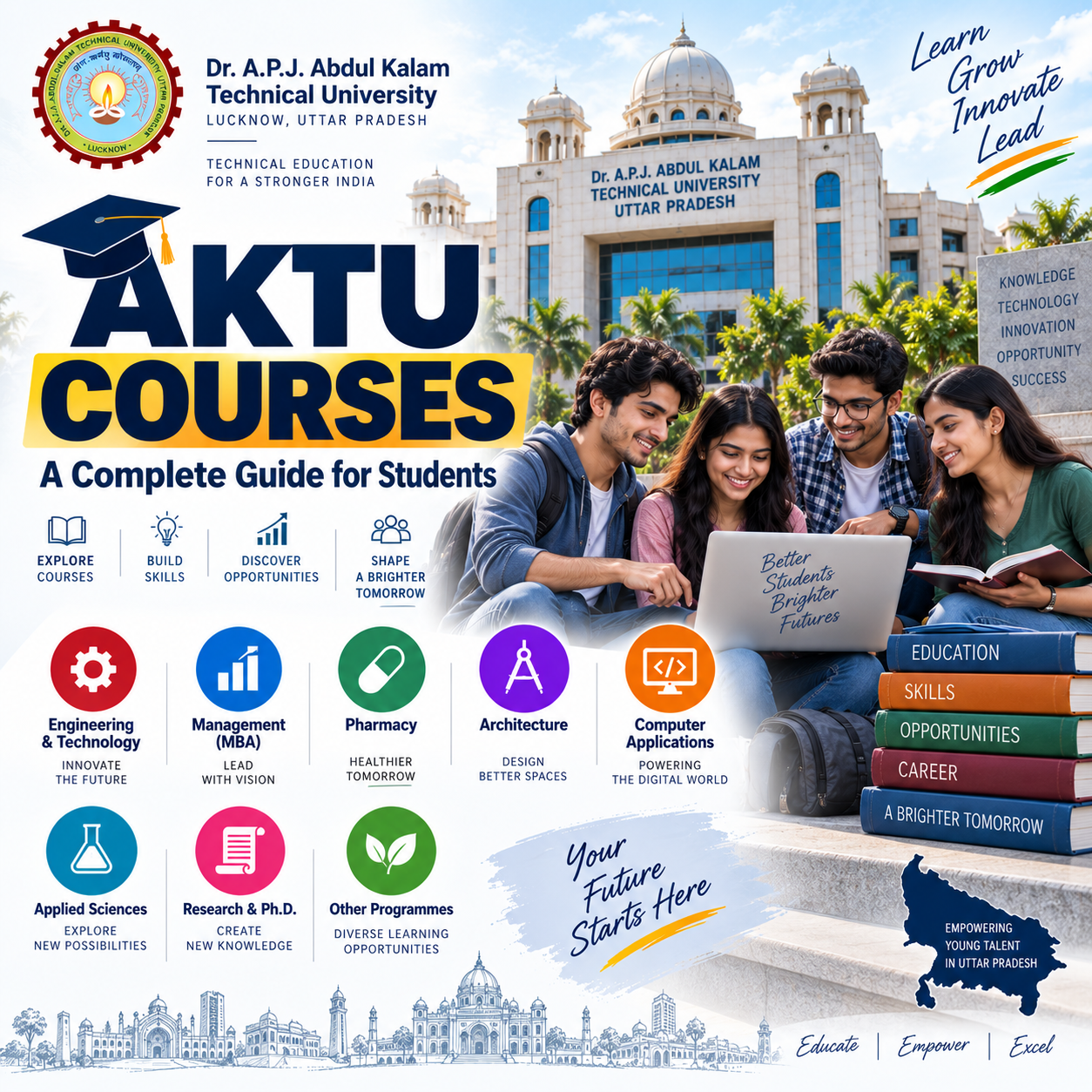
Choosing the right course is one of the most important decisions in a student’s academic journey. Dr. A.P.J. Abdul Kalam Technical University (AKTU) is associated with a wide range of technical and professional education programmes in Uttar Pradesh. Students often search for AKTU Courses to understand the available study options and choose a programme that matches their interests and career goals.
From engineering and technology to management, pharmacy and other professional fields, students can explore different academic pathways within the AKTU ecosystem. This guide provides a helpful overview of AKTU Courses and important factors students should consider before selecting a programme.
What Are AKTU Courses?
AKTU Courses refer to the academic programmes offered through the university and its associated academic ecosystem. These programmes are designed across different technical, professional and applied fields of education.
Depending on the programme and current university structure, students may find courses related to areas such as:
- Engineering and Technology
- Management
- Pharmacy
- Architecture
- Computer Applications
- Applied Sciences
- Research and Doctoral Studies
- Other professional and technical disciplines
Students should always check the latest official university and admission information for current course availability, eligibility and programme details.
1. Engineering and Technology Courses
Engineering is among the most popular areas of study associated with AKTU. Students interested in technology, innovation and problem-solving can explore different engineering disciplines.
Common areas of engineering study may include:
Computer Science and Engineering
This field focuses on computing, programming, software systems and modern technologies.
Students may study topics related to:
- Programming
- Data Structures
- Database Systems
- Software Development
- Computer Networks
- Artificial Intelligence
- Cloud Computing
Mechanical Engineering
Mechanical engineering involves the study of machines, manufacturing, design and engineering systems.
Civil Engineering
Civil engineering focuses on infrastructure and the built environment. Students may study areas related to construction, structures and transportation systems.
Electronics and Communication Engineering
This field involves electronic systems, communication technologies and related technical applications.
Electrical Engineering
Electrical engineering focuses on electrical systems, machines, power and related technologies.
The exact branches and course structures can vary depending on the current academic programme and institution.
2. Management Courses
Management education is suitable for students interested in business, leadership and organizational development.
Students in management programmes may explore subjects such as:
- Marketing
- Finance
- Human Resource Management
- Business Strategy
- Operations Management
- Entrepreneurship
Management education can help students develop skills in communication, decision-making, teamwork and business analysis.
3. Pharmacy Courses
Pharmacy is another important professional area of education. Students interested in medicines, pharmaceutical sciences and healthcare-related industries may explore pharmacy programmes.
Academic learning in this field can include topics related to:
- Pharmaceutical Sciences
- Drug Development
- Pharmaceutical Chemistry
- Pharmacology
- Healthcare Systems
Students interested in pharmacy should carefully check the eligibility requirements and professional regulations applicable to their programme.
4. Computer Applications and Technology
With the growing importance of digital technology, computer-related education has become highly relevant for students planning careers in the technology sector.
Students may develop knowledge in areas such as:
- Software Development
- Programming
- Database Management
- Web Technologies
- Data Analysis
- Cloud Computing
- Artificial Intelligence
Technology-related careers continue to evolve, so students should focus on building practical skills alongside their academic studies.
5. Architecture and Planning
Students interested in design, buildings and urban development may consider programmes related to architecture and planning.
These fields can involve a combination of:
- Design principles
- Building technology
- Planning concepts
- Environmental awareness
- Creative problem-solving
Architecture often requires students to combine technical knowledge with creativity and practical design skills.
6. Applied Sciences and Other Academic Areas
Technical and professional education also requires a strong foundation in scientific and analytical subjects.
Depending on the programme structure, students may encounter academic areas such as:
- Mathematics
- Physics
- Chemistry
- Environmental Studies
- Biotechnology
- Material Science
These subjects can support learning and research in different technical and professional disciplines.
How to Choose the Right AKTU Course?
With multiple AKTU Courses available across different fields, students should not choose a programme only because it is popular. The right course depends on individual interests, strengths and long-term goals.
Here are some important factors to consider.
1. Identify Your Interests
Ask yourself what subjects and activities genuinely interest you.
For example:
- Interested in coding and software? → Technology-related courses may be suitable.
- Interested in machines and design? → Mechanical engineering may be worth exploring.
- Interested in business? → Management programmes may match your interests.
- Interested in medicines and healthcare? → Pharmacy could be an option.
Understanding your interests can help you make a more informed decision.
2. Understand the Course Curriculum
Before choosing any programme, students should review its curriculum and subjects.
Check:
- What subjects will you study?
- Does the course include practical learning?
- Are projects part of the programme?
- What skills can you develop?
- Does the curriculum match your interests?
A course title alone does not always provide enough information. Understanding the syllabus is important.
3. Explore Career Opportunities
Different courses can lead to different professional opportunities. Students should research possible career paths before making a final decision.
For example, technical education may lead to opportunities in:
- Software and IT
- Engineering
- Manufacturing
- Construction
- Research
- Technology Services
Management education can be relevant to areas such as:
- Marketing
- Finance
- Human Resources
- Business Operations
- Entrepreneurship
Career opportunities can change over time, so students should continue developing relevant skills.
4. Consider Your Skills
Academic interests and personal strengths can both influence the right course choice.
Useful skills may include:
- Problem-solving
- Communication
- Creativity
- Mathematics
- Analytical thinking
- Teamwork
- Technical knowledge
Students should identify areas where they can improve and continue developing their skills throughout their education.
Why Practical Skills Matter Alongside AKTU Courses
A degree provides academic knowledge, but practical learning can also help students prepare for future opportunities.
Students may consider developing skills through:
- Personal projects
- Internships
- Workshops
- Online learning
- Technical competitions
- Industry-related events
- Communication practice
For example, a technology student can work on software projects, while a management student can improve presentation and business analysis skills.
Building a portfolio of projects and practical work can be valuable for students in many fields.
Digital Skills Students Should Consider
Technology is becoming increasingly important across almost every professional field. Students pursuing AKTU Courses may benefit from developing useful digital skills alongside their degree.
Depending on the chosen field, students can explore:
- Basic computer skills
- Data analysis
- Programming
- Digital communication
- Presentation tools
- Artificial Intelligence concepts
- Cybersecurity awareness
- Cloud technologies
The most relevant skills will depend on the student’s academic and career goals.
How Can Students Make the Most of Their Course?
Simply enrolling in a programme is only the beginning of the academic journey. Students can make their education more valuable by actively participating in learning opportunities.
Attend Classes Regularly
Regular participation can help students develop a stronger understanding of academic subjects.
Work on Projects
Projects allow students to apply theoretical knowledge to practical situations.
Develop Communication Skills
Strong communication can be useful in technical, professional and business environments.
Learn New Technologies
Technology continues to change, so continuous learning is important.
Build Professional Awareness
Students should understand how their chosen field works outside the classroom.
Important Things to Check Before Selecting an AKTU Course
Before choosing from available AKTU Courses, students should carefully verify important information through official sources.
Check:
- Current programme availability
- Eligibility requirements
- Admission procedures
- Course duration
- Course curriculum
- Institution details
- Applicable fees
- Recognition and approvals where relevant
Requirements and programme details can change, so students should rely on current official information before making an admission decision.
The Future of Technical and Professional Education
The future of education is increasingly connected with technology, practical skills and interdisciplinary learning. Students are now expected to develop more than just academic knowledge.
Future-focused students may benefit from combining:
- Academic education
- Digital skills
- Practical experience
- Communication abilities
- Problem-solving skills
- Continuous learning
This approach can help students prepare for changing professional environments.
Conclusion
AKTU Courses offer students opportunities to explore different areas of technical and professional education. From engineering and technology to management, pharmacy, architecture and other fields, students can choose an academic path based on their interests and future goals.
The best course is not necessarily the most popular one. Students should carefully understand the curriculum, evaluate their interests, research career possibilities and verify current programme information before making a decision.