Currently Empty: ₹0.00
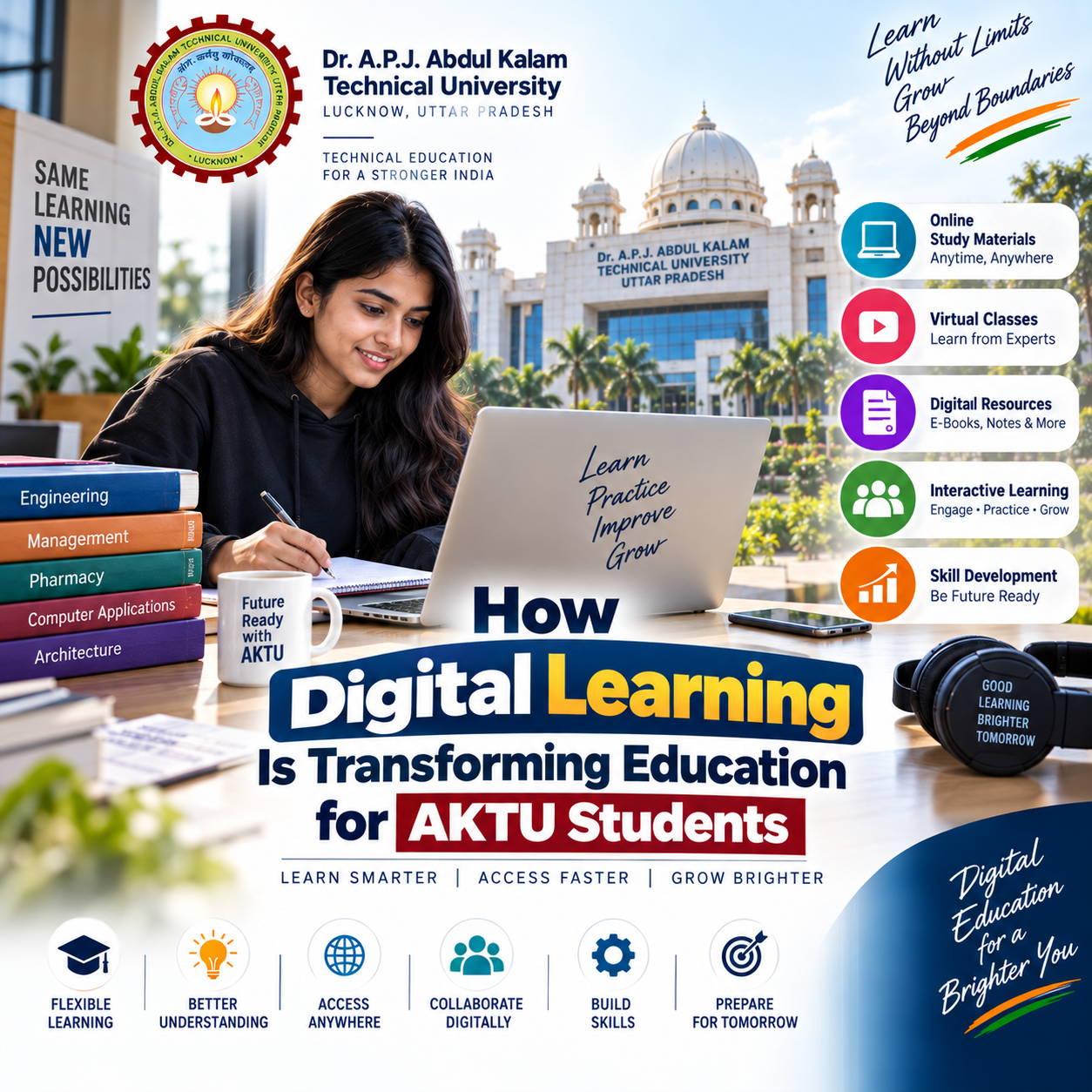
Digital technology has changed the way students learn, access information, and develop new skills. Traditional classroom education is now increasingly supported by online learning platforms, digital resources, virtual lectures, and technology-based learning tools. For students in technical and professional education, AKTU Digital Learning represents an important part of this changing educational environment.
Digital learning gives students greater flexibility and access to educational resources. From online study materials to virtual learning platforms, technology can help students learn beyond the boundaries of a traditional classroom.
This article explores how AKTU Digital Learning is transforming the educational experience for students and why digital skills are becoming increasingly important for the future.
What Is AKTU Digital Learning?
AKTU Digital Learning refers to the use of digital tools, online platforms, technology-based resources, and virtual learning methods that support the educational journey of students associated with Dr. A.P.J. Abdul Kalam Technical University.
Digital learning can include:
- Online study materials
- Digital course content
- Virtual classes
- Online assessments
- Educational videos
- Learning management systems
- Digital libraries and resources
- Technology-based assignments
- Online skill development courses
These tools can complement traditional classroom learning and provide students with additional opportunities to improve their knowledge and skills.
The Growing Importance of Digital Learning
Education is no longer limited to physical classrooms and printed books. Today, students can access educational content through computers, smartphones, tablets, and online platforms.
The growing importance of digital education allows students to:
- Learn from different locations
- Access educational resources more easily
- Review topics at their own pace
- Explore additional learning opportunities
- Develop digital skills
- Use interactive learning tools
For university students, digital learning can provide additional flexibility and help them become more comfortable with the technologies used in modern workplaces.
1. Learning Beyond the Traditional Classroom
One of the biggest advantages of AKTU Digital Learning is that students can explore educational resources beyond regular classroom hours.
A student can use digital platforms to:
- Review difficult topics
- Watch educational videos
- Access online notes
- Practice technical skills
- Explore additional subjects
- Learn at a flexible pace
This can be particularly useful when students want to revise concepts or gain a better understanding of complex topics.
Digital learning does not necessarily replace traditional education. Instead, it can support classroom learning by providing additional resources and learning methods.
2. Easy Access to Educational Resources
Digital platforms can make study materials more accessible to students. Instead of depending only on physical resources, students may be able to use online tools to access learning materials.
Digital resources can include:
- E-books
- Lecture presentations
- Recorded educational sessions
- Research materials
- Practice questions
- Online tutorials
- Technical documentation
Having access to a wider range of resources can help students explore subjects in greater depth.
3. Flexible Learning for Students
Every student has a different learning style and learning speed. Some students understand concepts quickly, while others may need additional time to review a topic.
Digital learning provides more flexibility because students can often revisit educational resources when needed.
For example, students can:
- Rewatch educational videos
- Review notes multiple times
- Practice concepts independently
- Learn new skills outside regular classes
This flexibility can help students take a more active role in their educational journey.
How Digital Learning Supports Technical Education
Technical and professional education is closely connected with technology. Students studying engineering, computer science, management, pharmacy, architecture, and other professional fields increasingly need digital knowledge.
AKTU Digital Learning can support students by helping them become familiar with modern digital tools and learning environments.
Students may explore areas such as:
- Programming
- Data analysis
- Artificial Intelligence
- Cloud Computing
- Digital communication
- Research tools
- Online collaboration
- Technology-based problem-solving
The ability to learn and adapt to new technologies is becoming an increasingly valuable skill.
4. Online Learning and Skill Development
A university degree provides an important academic foundation, but students may also benefit from developing practical skills.
Digital learning platforms can help students explore additional skills related to their chosen fields.
For example, students may learn:
Technical Skills
- Programming languages
- Web development
- Data analysis
- Cloud technologies
- Cybersecurity concepts
Professional Skills
- Communication
- Presentation
- Team collaboration
- Project management
- Problem-solving
Digital Skills
- Online research
- Digital productivity tools
- Virtual collaboration
- Data management
- AI tools
Combining academic education with practical digital skills can help students prepare for changing professional environments.
5. Improved Collaboration Through Technology
Digital tools can also make collaboration easier for students.
Students working on projects may use technology to:
- Share documents
- Communicate with team members
- Manage project tasks
- Conduct online discussions
- Present ideas digitally
Collaboration is an important skill in both education and professional life. Learning how to work effectively with others through digital platforms can be useful for future careers.
The Role of Artificial Intelligence in Digital Learning
Artificial Intelligence is becoming an increasingly important part of education and technology.
AI-based tools may help students with:
- Understanding concepts
- Organizing information
- Generating practice ideas
- Language support
- Research assistance
- Learning personalized content
However, students should use AI responsibly. Information generated by AI should be reviewed carefully, especially when working on important academic or technical topics.
AI should be seen as a learning support tool rather than a replacement for critical thinking and independent learning.
6. Preparing Students for Future Careers
Modern workplaces are becoming more digital. Employers increasingly value candidates who can work with technology, adapt to new tools, and continue learning throughout their careers.
Students can prepare for future opportunities by developing:
- Technical knowledge
- Digital literacy
- Communication skills
- Analytical thinking
- Problem-solving abilities
- Adaptability
AKTU Digital Learning can contribute to this process by encouraging students to become familiar with digital tools and technology-based education.
Challenges of Digital Learning
While digital education provides many opportunities, it also comes with certain challenges.
Digital Distractions
Students may face distractions from social media, entertainment platforms, and other online activities.
Creating a focused study routine can help improve productivity.
Internet Access
Reliable internet access is important for online learning. Students in some areas may face connectivity challenges.
Information Overload
The internet contains a huge amount of information. Students need to learn how to identify reliable and useful educational sources.
Lack of Practical Experience
Online learning can support education, but practical experience remains important in many technical and professional fields.
Students should try to balance:
- Digital learning
- Classroom education
- Practical projects
- Internships
- Workshops
Tips for AKTU Students to Make the Most of Digital Learning
Students can improve their learning experience by following a structured approach.
1. Create a Learning Schedule
Set aside regular time for online learning and revision.
2. Focus on Reliable Resources
Use trusted educational platforms and official academic resources.
3. Take Notes
Digital learning becomes more effective when students actively take notes and organize important information.
4. Build Practical Projects
Students can apply their knowledge by working on personal or academic projects.
5. Develop Digital Skills
Explore tools and technologies relevant to your academic field.
6. Avoid Digital Distractions
Create a dedicated environment for studying and learning.
7. Keep Learning New Technologies
Technology changes quickly, so continuous learning is important.
The Future of AKTU Digital Learning
The future of education is likely to include a stronger combination of traditional learning and digital technology. Online platforms, Artificial Intelligence, virtual collaboration, and interactive learning tools may continue to influence the way students study.
Future digital education may focus more on:
- Personalized learning experiences
- AI-supported educational tools
- Virtual learning environments
- Interactive study materials
- Digital assessments
- Online collaboration
- Industry-focused skills
Students who learn how to adapt to new technologies may be better prepared for future academic and professional opportunities.
Why Digital Skills Are Important for Every Student
Regardless of the course or career path, digital knowledge is becoming increasingly important.
A student pursuing engineering may need technical software. A management student may need data and presentation tools. A researcher may need digital research platforms.
Therefore, students should develop a strong foundation in:
- Digital literacy
- Online communication
- Research skills
- Technology awareness
- Data understanding
- Responsible use of AI
These skills can support both academic growth and professional development.
Conclusion
AKTU Digital Learning represents the growing role of technology in modern education. Digital platforms and learning resources can provide students with greater flexibility, access to information, and opportunities to develop new skills.
However, technology is most effective when students use it with discipline and purpose. Digital learning should support academic understanding, critical thinking, practical experience, and continuous skill development.