
Currently Empty: ₹0.00
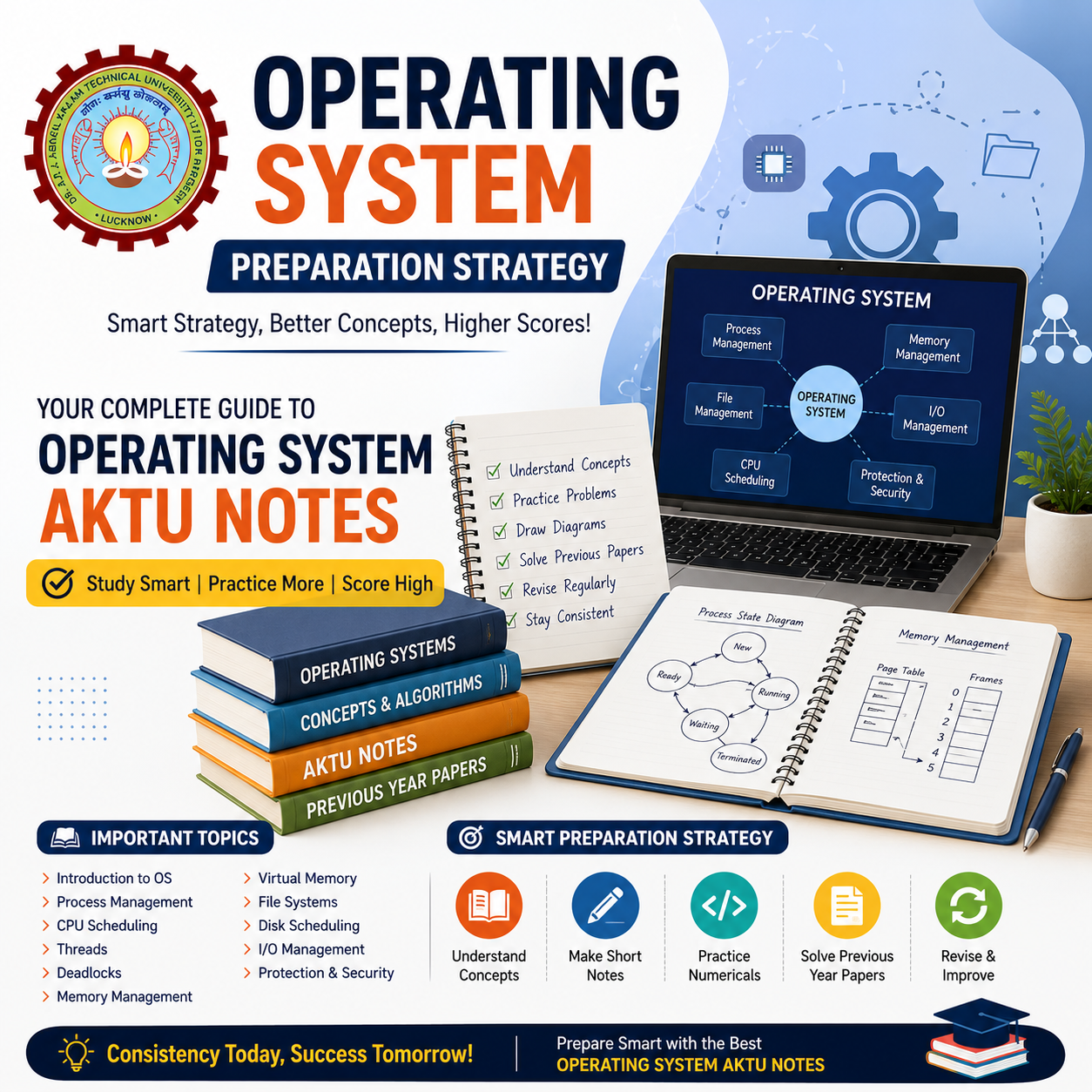
Preparing for an Operating System (OS) exam can feel overwhelming because the subject combines theoretical concepts with practical problem-solving. However, with the right study plan and reliable Operating System AKTU Notes, you can understand core concepts, improve your problem-solving skills, and score excellent marks in your AKTU examinations.
This guide provides a step-by-step preparation strategy to help AKTU students study Operating Systems efficiently.
Why Is Operating System Important?
An Operating System is one of the most fundamental subjects in Computer Science and Information Technology. It acts as the interface between computer hardware and software, managing resources and ensuring efficient system performance.
Understanding Operating Systems also builds a strong foundation for:
- Software Development
- System Programming
- Cloud Computing
- Cyber Security
- Computer Networks
- Competitive Programming
- Technical Interviews
Start with the AKTU Syllabus
Before beginning your preparation, download the latest AKTU syllabus and identify the important units.
Generally, Operating System includes topics like:
- Introduction to Operating Systems
- Process Management
- CPU Scheduling
- Threads
- Deadlocks
- Memory Management
- Virtual Memory
- File Systems
- Disk Scheduling
- Input/Output Management
- Protection and Security
Studying according to the syllabus ensures you don’t waste time on unnecessary topics.
Use Well-Structured Operating System AKTU Notes
Quality Operating System AKTU Notes help simplify difficult concepts.
Choose notes that include:
- Simple explanations
- Flowcharts
- Diagrams
- Examples
- Numerical problems
- Previous year questions
- Unit-wise summaries
Organized notes save revision time before exams.
Understand Concepts Instead of Memorizing
Operating System is a conceptual subject.
Instead of memorizing definitions, focus on understanding:
- How processes work
- Why scheduling algorithms differ
- How memory allocation happens
- Why deadlocks occur
- How paging and segmentation function
Strong concepts help answer both theoretical and practical questions.
Practice CPU Scheduling Problems
Scheduling algorithms frequently appear in AKTU examinations.
Practice problems involving:
- FCFS
- SJF
- Priority Scheduling
- Round Robin
- Multilevel Queue Scheduling
Calculate:
- Waiting Time
- Turnaround Time
- Response Time
Regular practice improves speed and accuracy.
Master Deadlock Concepts
Deadlock is one of the most important units.
Understand:
- Necessary Conditions
- Resource Allocation Graph
- Banker’s Algorithm
- Deadlock Prevention
- Deadlock Avoidance
- Deadlock Detection
- Deadlock Recovery
Flowcharts make these topics much easier to remember.
Focus on Memory Management
Memory Management carries significant weight in exams.
Study:
- Paging
- Segmentation
- Virtual Memory
- Demand Paging
- Page Replacement Algorithms
Practice algorithms like:
- FIFO
- LRU
- Optimal Page Replacement
Learn Through Diagrams
Many Operating System concepts become easier through diagrams.
Draw and practice:
- Process State Diagram
- Memory Layout
- Paging Architecture
- File System Structure
- Scheduling Queue
- Resource Allocation Graph
Neat diagrams can also improve presentation in the examination.
Solve Previous Year Question Papers
Previous year papers reveal:
- Frequently asked topics
- Important numerical questions
- Repeated theoretical questions
- Marking pattern
- Difficulty level
Aim to solve at least the last 5 years’ AKTU question papers before your exams.
Create Short Revision Notes
One week before exams, revise only concise notes.
Include:
- Definitions
- Algorithms
- Formulae
- Scheduling tables
- Memory management comparisons
- Important diagrams
These quick notes save valuable revision time.
Practice Numerical Questions Daily
Numericals are scoring if practiced regularly.
Spend 20–30 minutes daily solving:
- CPU Scheduling
- Page Replacement
- Disk Scheduling
- Memory Allocation
Consistency is more important than studying for long hours occasionally.
Last Week Revision Strategy
During the final week:
- Revise one unit daily
- Solve one previous year paper every day
- Practice diagrams
- Review algorithms
- Focus on weak topics
- Avoid starting completely new chapters
A structured revision plan boosts confidence before the exam.
Common Mistakes to Avoid
Many students lose marks because they:
- Memorize without understanding
- Ignore numericals
- Skip previous year papers
- Forget diagrams
- Study only one day before exams
- Ignore revision
Avoiding these mistakes can significantly improve your performance.
Tips to Score High in Operating System
- Study consistently instead of cramming.
- Use reliable Operating System AKTU Notes.
- Practice scheduling and memory management problems regularly.
- Draw clean diagrams wherever applicable.
- Solve previous year AKTU question papers.
- Revise important algorithms multiple times.
- Maintain clear and organized answers in the examination.
Final Thoughts
Scoring well in Operating Systems doesn’t require studying for endless hours—it requires studying smart. With a clear preparation strategy, regular practice, and comprehensive Operating System AKTU Notes, you can confidently tackle both theoretical and numerical questions in your AKTU examinations.
Stay consistent, revise regularly, and focus on understanding concepts rather than memorizing them. A disciplined approach will not only help you score better but also strengthen your technical knowledge for future placements and competitive exams.