
Currently Empty: ₹0.00
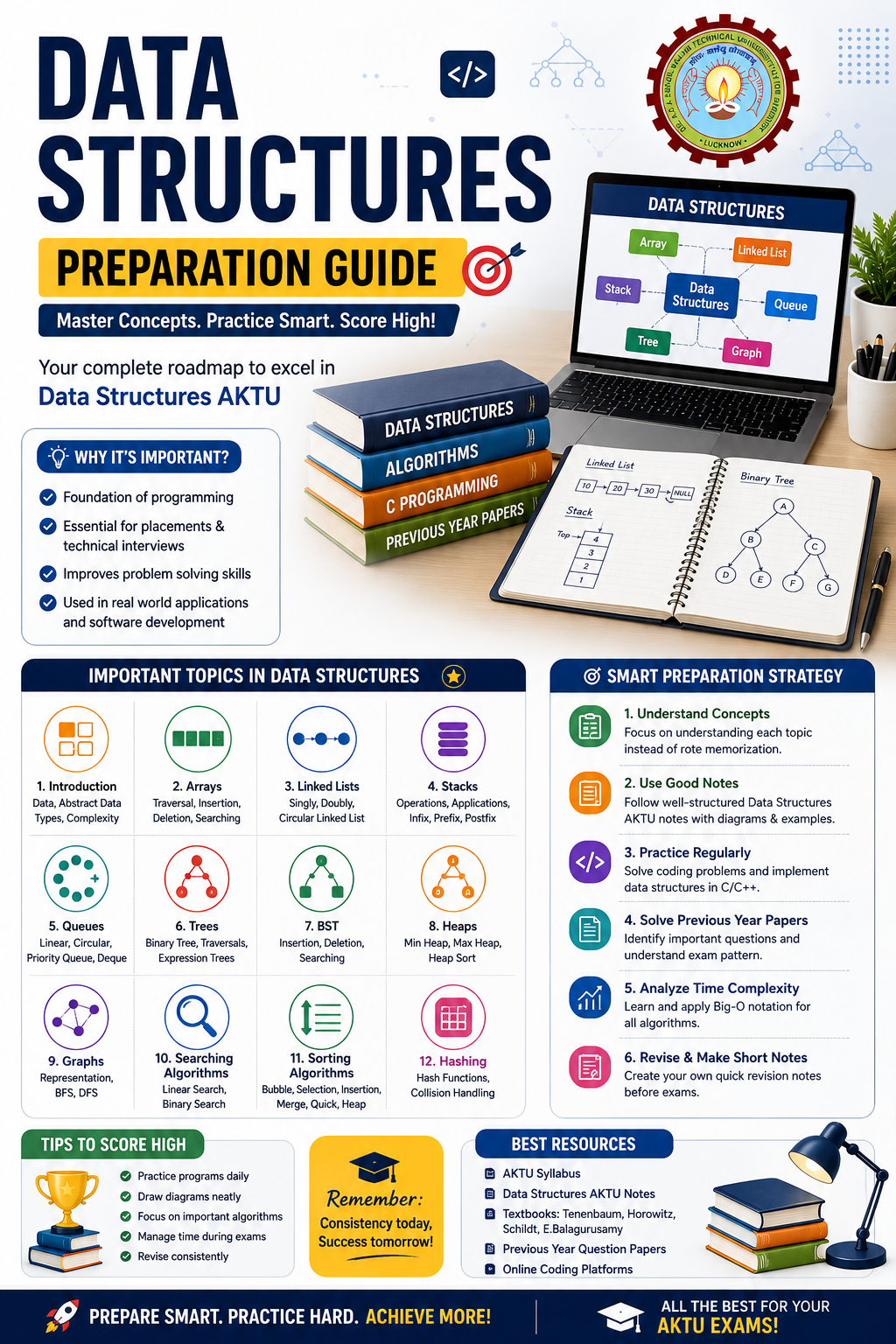
Data Structures is one of the most important subjects for Computer Science and Information Technology students. It forms the foundation of programming, software development, competitive coding, and technical interviews. With the right preparation strategy and comprehensive Data Structures AKTU notes, you can master the subject and score excellent marks in your semester examinations.
This guide provides an effective study plan to help AKTU students prepare for Data Structures systematically.
Why Is Data Structures Important?
Data Structures help organize and manage data efficiently, allowing programs to perform operations like searching, sorting, insertion, and deletion quickly.
A strong understanding of Data Structures is essential for:
- Software Development
- Competitive Programming
- Technical Interviews
- Artificial Intelligence
- Machine Learning
- Database Management
- System Design
Mastering Data Structures also improves logical thinking and problem-solving skills.
Understand the AKTU Syllabus
The first step in preparing for Data Structures AKTU is reviewing the latest AKTU syllabus.
Important topics generally include:
- Introduction to Data Structures
- Arrays
- Linked Lists
- Stacks
- Queues
- Trees
- Binary Trees
- Binary Search Trees
- Graphs
- Searching Algorithms
- Sorting Algorithms
- Hashing
- Recursion
Studying according to the syllabus ensures efficient preparation.
Study with Organized Data Structures AKTU Notes
High-quality Data Structures AKTU notes simplify difficult concepts and save revision time.
Look for notes that include:
- Simple explanations
- Diagrams
- Flowcharts
- Algorithm steps
- Time complexity analysis
- Practice questions
- Previous year problems
Well-organized notes make revision faster before exams.
Build Strong Programming Concepts
Instead of memorizing algorithms, understand how they work.
Focus on:
- Data storage
- Memory allocation
- Algorithm efficiency
- Time complexity
- Space complexity
Conceptual understanding helps solve both theoretical and coding questions.
Practice Every Data Structure
Learn each topic individually before moving to the next.
Arrays
Understand:
- Traversal
- Insertion
- Deletion
- Searching
- Sorting
Linked Lists
Practice:
- Singly Linked List
- Doubly Linked List
- Circular Linked List
Learn insertion, deletion, and traversal operations.
Stacks
Understand:
- Push
- Pop
- Peek
- Applications of Stack
- Expression Conversion
Queues
Study:
- Simple Queue
- Circular Queue
- Priority Queue
- Deque
Practice implementation and applications.
Trees
Trees are among the most important topics.
Cover:
- Binary Tree
- Binary Search Tree
- Tree Traversals
- AVL Tree
- Heap
Practice drawing trees and solving traversal problems.
Graphs
Understand:
- Graph Representation
- BFS
- DFS
- Applications of Graphs
Graphs frequently appear in examinations and technical interviews.
Learn Searching & Sorting Algorithms
These topics are highly scoring.
Practice:
Searching
- Linear Search
- Binary Search
Sorting
- Bubble Sort
- Selection Sort
- Insertion Sort
- Merge Sort
- Quick Sort
- Heap Sort
Also understand their:
- Best Case
- Worst Case
- Average Case
- Time Complexity
Understand Time Complexity
AKTU examinations often include complexity analysis.
Learn Big-O notation for:
- Arrays
- Linked Lists
- Trees
- Graphs
- Sorting Algorithms
- Searching Algorithms
Comparing algorithm efficiency helps answer conceptual questions effectively.
Draw Neat Diagrams
Visual learning makes Data Structures much easier.
Practice diagrams for:
- Linked Lists
- Stack Operations
- Queue Operations
- Tree Traversals
- Graph Representation
- Heap Structure
Neat diagrams also improve answer presentation.
Solve Previous Year Question Papers
Previous year papers help identify:
- Frequently asked questions
- Important algorithms
- Repeated numericals
- Exam patterns
- Weightage of topics
Try solving at least the previous five years’ AKTU papers before your exams.
Prepare Short Revision Notes
One week before exams, revise using concise notes.
Include:
- Definitions
- Algorithms
- Time Complexity Table
- Important Programs
- Tree Traversals
- Sorting Comparisons
- Graph Algorithms
Quick notes improve revision efficiency.
Practice Coding Daily
Even if the exam focuses on theory, coding improves conceptual clarity.
Spend 30–45 minutes daily practicing:
- Array programs
- Linked List operations
- Stack implementation
- Queue implementation
- Tree traversals
- Sorting algorithms
Regular practice strengthens logical thinking.
Last Week Preparation Strategy
During the final week:
- Revise one unit daily
- Solve previous year papers
- Practice important algorithms
- Review time complexities
- Revise diagrams
- Focus on weak topics
Avoid learning entirely new topics at the last moment.
Common Mistakes to Avoid
Students often lose marks because they:
- Memorize algorithms without understanding
- Ignore time complexity
- Skip diagrams
- Avoid coding practice
- Don’t solve previous year papers
- Leave revision until the last day
Avoiding these mistakes can significantly improve your performance.
Tips to Score High in Data Structures
- Follow the AKTU syllabus.
- Use reliable Data Structures AKTU notes.
- Practice algorithms regularly.
- Learn time complexity thoroughly.
- Solve previous year question papers.
- Draw clean diagrams.
- Revise consistently.
Final Thoughts
Success in Data Structures AKTU depends on understanding concepts rather than memorizing them. Regular practice, quality notes, algorithm analysis, and previous year question papers will help you build confidence and perform well in examinations.
A strong foundation in Data Structures not only helps you score higher in AKTU exams but also prepares you for coding interviews, placements, and a successful career in software development.